Snorkeling Tours for First-Timers: Choosing a Trip and Staying Comfortable
Snorkeling is simple once a few basics click: a mask that seals, slow breathing and calm water to start.
The short version
- Choose calm, shallow sites and tours that offer flotation vests and a proper briefing.
- Mask fit matters most: it should seal against your face without the strap.
- Breathe slowly and practice in shallow water before swimming out.
- Don’t touch or stand on coral, and follow local rules on sunscreen.
Snorkeling lets you see underwater life with almost no training. First-timers tend to struggle with the same few things: a leaky mask, a foggy view and tense breathing. A good tour and a little preparation fix all three.
What a typical snorkeling trip looks like
- Check-in and gear fitting, either at the shop or on the boat.
- A boat ride or short walk to the first site.
- A safety briefing on signals, currents, how long you’ll be in the water and how to get back on board.
- Time in the water, often at one or two different sites.
- Snacks or a light meal on some trips, and the return ride.
Shore-based trips skip the boat and start from a beach, which can suit nervous first-timers and anyone prone to seasickness.
Picking a beginner-friendly trip
- Calm, shallow sites: protected bays and lagoons are far easier than open water.
- Small groups and attentive guides: someone who helps with gear and keeps an eye on the group.
- Flotation vests: many tours offer them, and they let you float without effort.
- A clear briefing: on gear, signals, currents and what not to touch.
- A sensible weather policy: wind and swell affect both comfort and visibility.
Gear that fits
| Item | What to check |
|---|---|
| Mask | Hold it to your face without the strap and inhale gently through your nose; it should stay in place |
| Snorkel | A comfortable mouthpiece; a dry or semi-dry top helps keep splashes out |
| Fins | Snug but not tight, with no pinching |
| Vest | Adjusted to fit and inflated as much as you need |
Tour tip
Before you swim out, stand in waist-deep water, put your face in and breathe through the snorkel for a minute. It’s the quickest way to feel at ease.
Getting comfortable in the water
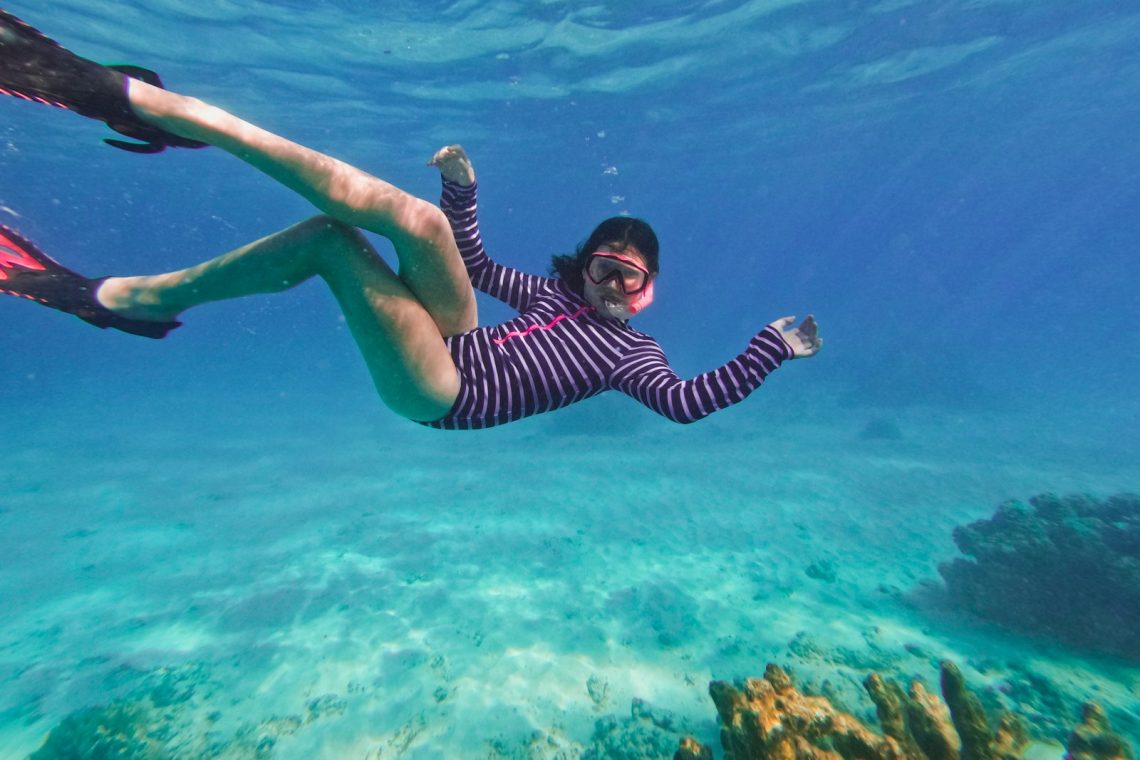
- Float face-down and breathe slowly. Calm breathing uses less energy and keeps you relaxed.
- Kick from the hips with long, slow strokes; there’s no need to use your arms.
- Clear your snorkel with a short, sharp exhale if water gets in.
- Stay near your buddy and the group.
Protecting reefs and marine life
- Don’t touch, stand on or kick coral. It’s alive and easily damaged.
- Keep your fins well away from the bottom.
- Don’t feed, chase or crowd fish, turtles or other animals.
- Take nothing from the water.
Keep in mind
Some places restrict certain sunscreen ingredients to protect reefs. Check the rules for your destination, and consider a rash guard or wetsuit top for sun protection in the water.
Staying comfortable
- Wear a rash guard for sun protection and minor scrapes.
- Drink water and reapply sun protection between swims.
- If you’re prone to seasickness, ask how long the boat ride is and plan ahead.
- Signal the guide if you’re tired or cold, and head back to the boat.
Be careful
Currents can be strong in some places. Listen to the briefing, follow the guide’s instructions and never snorkel alone.
How to choose your first snorkeling trip
- Look for calm sites, small groups and flotation vests.
- Bring your own mask if you have one that fits well.
- Ask about the boat ride and typical sea conditions.
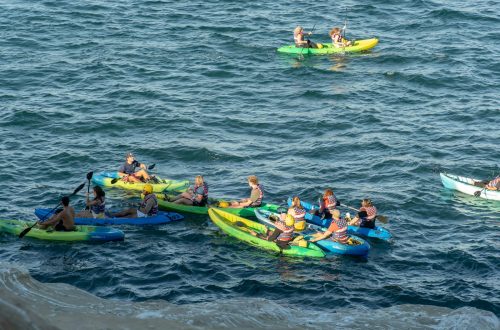
If you’d like to explore from the surface too, our guide to your first kayak tour covers paddling basics, and our guide to responsible wildlife tours explains how to watch marine life without disturbing it.
Quick answers
Can non-swimmers go snorkeling?
Some tours welcome weak swimmers with flotation vests and close supervision, but being comfortable in the water helps a lot. Tell the operator before you book.
How do I stop my mask from fogging?
Use an anti-fog product, rinse the mask just before you get in and keep it on your face rather than pushed up on your forehead.
Should I bring my own snorkel gear?
Tours usually provide gear. Some travelers bring their own mask for a better fit and for hygiene. Fins are almost always provided.
What kind of sunscreen should I use?
Some destinations restrict certain sunscreen ingredients to protect reefs. Check the local rules, and consider a rash guard to cut down on how much sunscreen you need.