How Tip-Based Walking Tours Work, and What to Expect
They’re often called free walking tours, but the guide still gets paid. Knowing how the model works helps you pick a good one and tip fairly.
The short version
- Tip-based tours have no fixed price; guests pay the guide what they feel the tour was worth at the end.
- In many cities, guides pay the company a fee for each guest who books, so no-shows can cost them.
- Check recent reviews, the route and any group size limit before you reserve a spot.
- Bring cash in the local currency, and cancel your booking if your plans change.
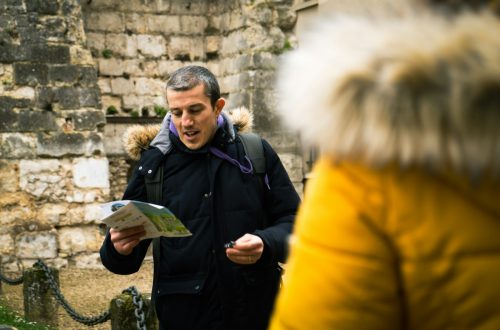
Tip-based walking tours run in many major cities, usually from a central square at set times each day. You follow a guide for a couple of hours, see the main sights on foot and pay what you think the tour was worth at the end. That simple setup hides a few details worth knowing before you go.
How the model works
- There is no ticket price. At the end of the tour, each guest tips the guide directly, usually in cash.
- Guides often work with a company or booking platform. In many cities, the guide pays that company a fee for each guest who booked. That’s why no-shows and very small tips can leave a guide out of pocket.
- Tours are broad introductions. Most last two to three hours and cover the historic center or one neighborhood, with stops at landmarks and plenty of stories in between.
Why they make a good first-day plan
- You learn the layout of the city and how the main sights connect.
- Guides often share practical advice: which areas deserve a return visit, how local transit works and where locals eat nearby.
- It’s an easy way to meet other travelers, which helps on a solo trip.
How to pick a good one
- Read recent reviews, not just the score. Look for comments about the guide’s storytelling, the pace and how crowded the group felt.
- Check the route and length. Some tours cover a lot of ground; others focus on a theme such as history, architecture or street art.
- Look for a group size limit. Very large groups make it hard to hear the guide and see what they’re pointing at.
- Confirm the meeting point and language. Guides usually wait at a landmark with a sign, a colored umbrella or a branded shirt.
- Think about the time of day. Morning tours are cooler in summer, while evening tours can feel livelier.
Tour tip
Join a walking tour on your first full day. What you learn about the layout and the neighborhoods makes the rest of the trip easier to plan.
How tipping is usually handled
- Tips are paid at the end, directly to the guide. Some guides also take card or app payments, but carry cash in case they don’t.
- There’s no fixed amount. A fair approach is to think about what a paid tour of similar length would cost locally, then adjust for how much you got out of it.
- Tip per person, not per party. If a family of four joins, the tip should reflect four guests.
- If the tour was genuinely poor, it’s fine to tip less. A sentence of honest feedback helps more than leaving without a word.
Keep in mind
Some guides mention a suggested range at the start. Treat it as guidance rather than a rule; it’s a useful reference if you’re unsure what’s normal locally.
Etiquette guides appreciate
- Arrive a few minutes early so the group can start on time.
- Cancel if you can’t come. Where guides pay per booking, an empty reservation still costs them.
- Stay with the group and keep side conversations down while the guide is speaking.
- Ask questions. Most guides enjoy them, and the answers often lead to the best tips of the day.
When a paid tour is the better choice
Tip-based tours are wide-angle introductions. A paid tour is often worth it when you want:
- A smaller group or a guide of your own. Our comparison of private guides and small-group tours covers the trade-offs.
- Entry to a museum, monument or other ticketed site.
- A specialized subject, such as food, art or a particular period of history.
- A fixed price you can budget for in advance.
If you’re comparing paid options, our guide to reading a day tour listing explains what to check before you book.
The bottom line
A tip-based walking tour is a low-commitment way to get your bearings in a new city. Reserve a spot, show up on time, carry cash and tip according to the value you got. When you want depth, a small group or entry to a site, a paid tour earns its price. For tipping on other kinds of tours, see our guide to tipping tour guides and drivers.
Quick answers
How much should I tip on a free walking tour?
There’s no set amount. Many travelers think about what a paid tour of similar length would cost locally and tip in that range, then adjust for how much they enjoyed it. Some guides mention a suggested range at the start.
Do I need to book a tip-based walking tour?
Many tours ask you to reserve a spot so the guide can plan group sizes. Booking is usually free, but if you can’t make it, cancel so the spot goes to someone else.
Are tip-based tours as good as paid tours?
They can be excellent, since guides depend on tips and have every reason to do well. Paid tours usually offer smaller groups, more specialized topics and entry to ticketed sites.
Can I leave a walking tour early?
Usually, yes. It’s polite to let the guide know and to tip for the part of the tour you joined.